
This post may contain affiliate links. Please read our disclosure policy.

I FINALLY KNOW HOW TO MAKE HOMEMADE KIMCHEE (or homemade kimchi; please read the history of the word ‘kimchee’ and ‘kimchi’ below).
My friend’s Korean mother came over to my house and taught me how to make homemade kimchi/kimchee and I am forever grateful.
I eat so much kimchi/kimchee. I buy bags of them at the Asian mart and they aren’t cheap. One bag is about $13 and it only lasts me about a week.
I also love incorporating kimchee into a variety of dishes.
I put kimchee in fried rice (I have a kimchi fried rice in my cookbook), on top of scrambled eggs, on top of burgers, on top of bulgogi, and so much more.
What is kimchi/kimchee?
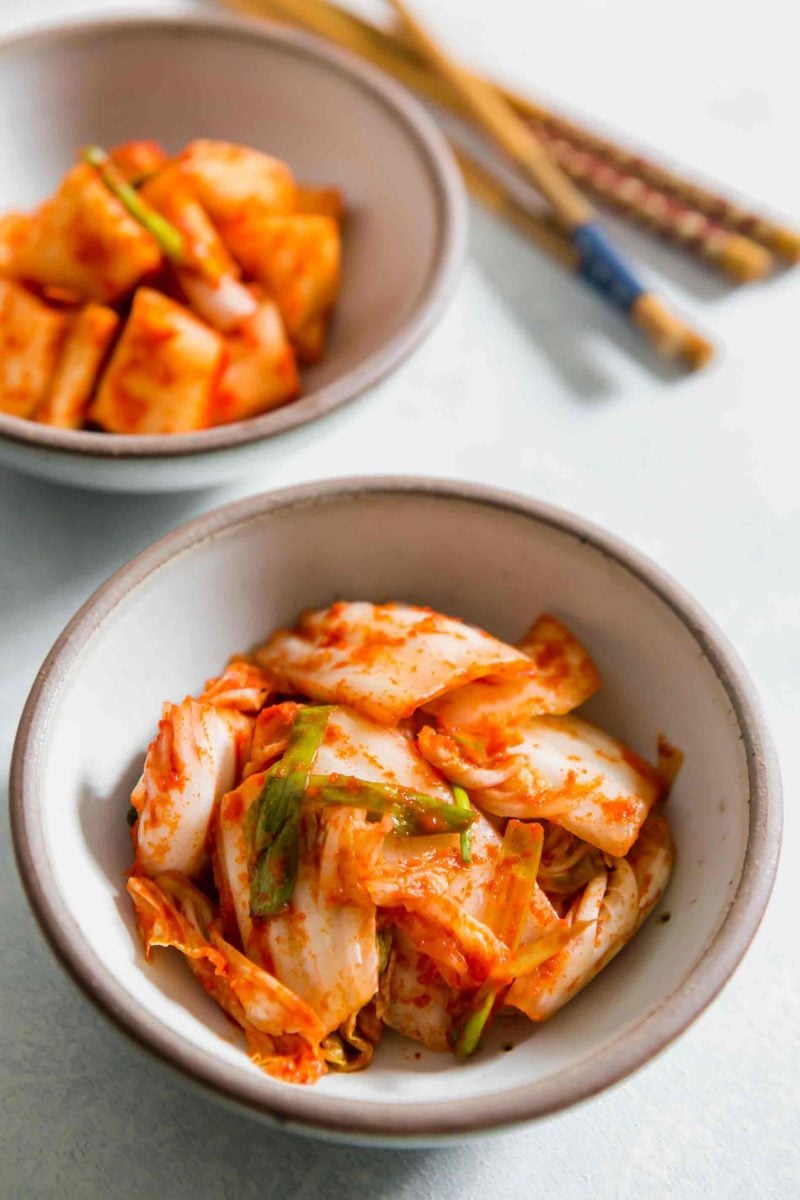
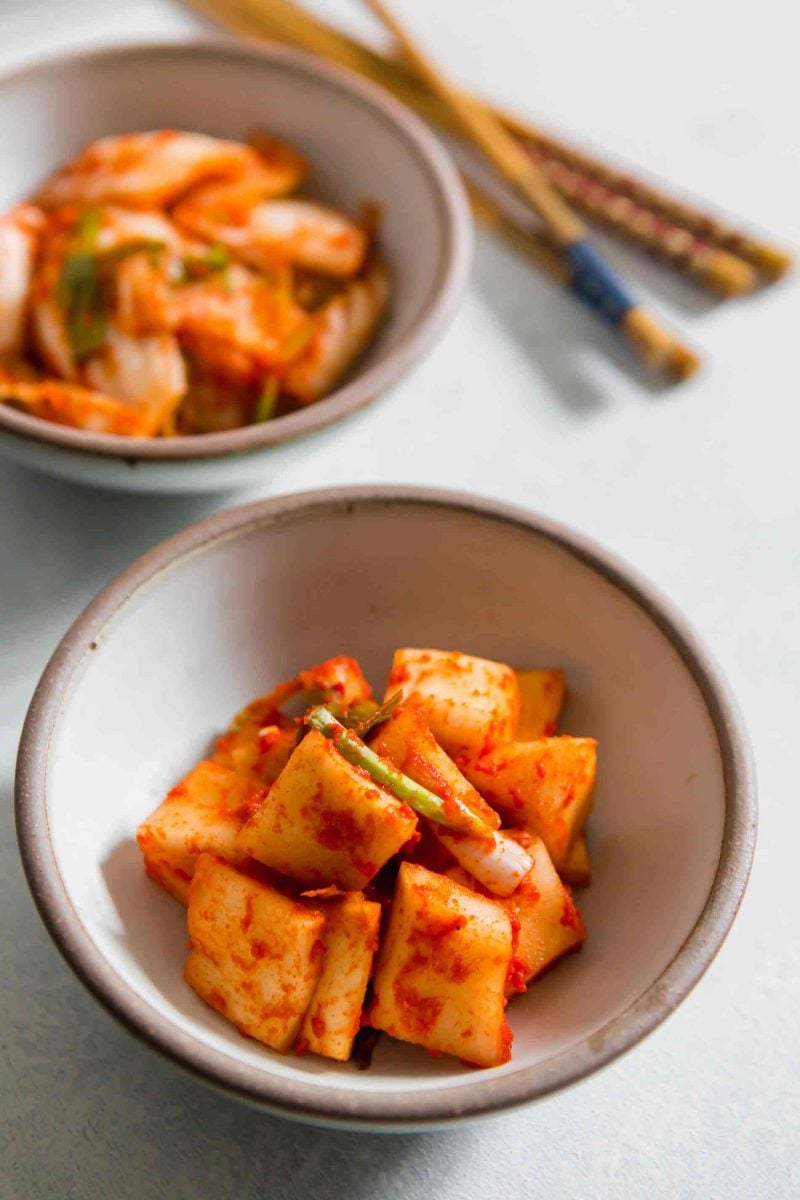
Kimchi or kimchee is a staple traditional Korean side dish made of fermented and salted Napa cabbage and radish.
What does kimchee like?
It has a multitude of flavors. The prominent flavors are garlicky, sour, and spicy.
Is homemade kimchee really spicy?
Depends on what kind of kimchee you make and/or buy. Some can be really spicy but with homemade kimchee you can tailor it to your spice level.
Why is it spelled kimchi and kimchee?
Kimchee is the traditional way that South Koreans spell it. Kimchi is made up from the Japanese, but there is history about the spelling that you can explore more here.
Why is homemade kimchi better than store-bought?
- So much cheaper (cost-effective)
- You can make it your own
- You can share with friends and family
- It’s fun!
Can you use American cabbage?
No, it won’t be the same.
Can I use gochujang instead of the red pepper powder?
No, no, no.
Can I use regular salt?
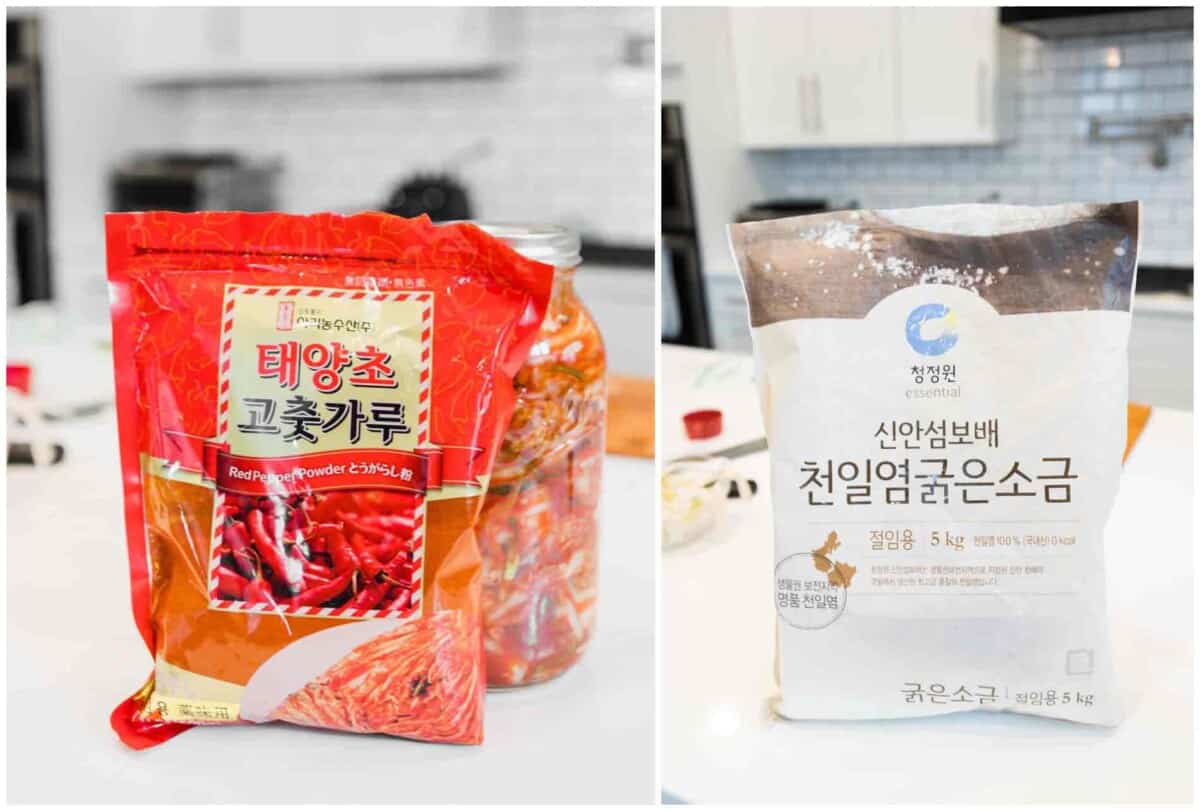
In the video, Chunok told me that you should try to get coarse sea salt and not salt like Morton’s or Diamond kosher salt because it makes the cabbage too soft and wilted and pulls out too much moisture so you’ll have a lot more liquid.
So definitely look for coarse sea salt granules.
What if I can’t find the red pepper powder?
Okay, so I’m about to go on a rant here because everyone wants authentic cultural recipes but no one is willing to actually get the authentic ingredients that make the dish authentic.
You cannot substitute this red pepper powder for anything else. It is specific to kimchi.
It is not the same as cayenne pepper. It is not the same as chili powder. It is not the same as red pepper flakes. It is not the same as red pepper flakes pulverized. It is not the same as sriracha.
Another term for this Gochugaru if you cannot find ‘red pepper powder.’
I know for sure they have it on Amazon.
Please, everyone, if you want to make this authentic and for it to turn out as intended, please stop substituting and please stop lumping all Asian condiments as the same. It’s like saying we can make pasta sauce with ketchup because they’re both red and have tomato in it.
How do I get my homemade kimchee more sour tasting like what I’m used to?
Leave it out longer before you put it in the fridge.
How do I get my homemade kimchee less sour? It’s too pungent for me.
Put it in the fridge earlier. Leave it overnight after you’ve made it and then put it in the fridge in the morning.
What if I don’t have a blender?
You can use a food processor.
What types of jars did you use for your homemade kimchee?
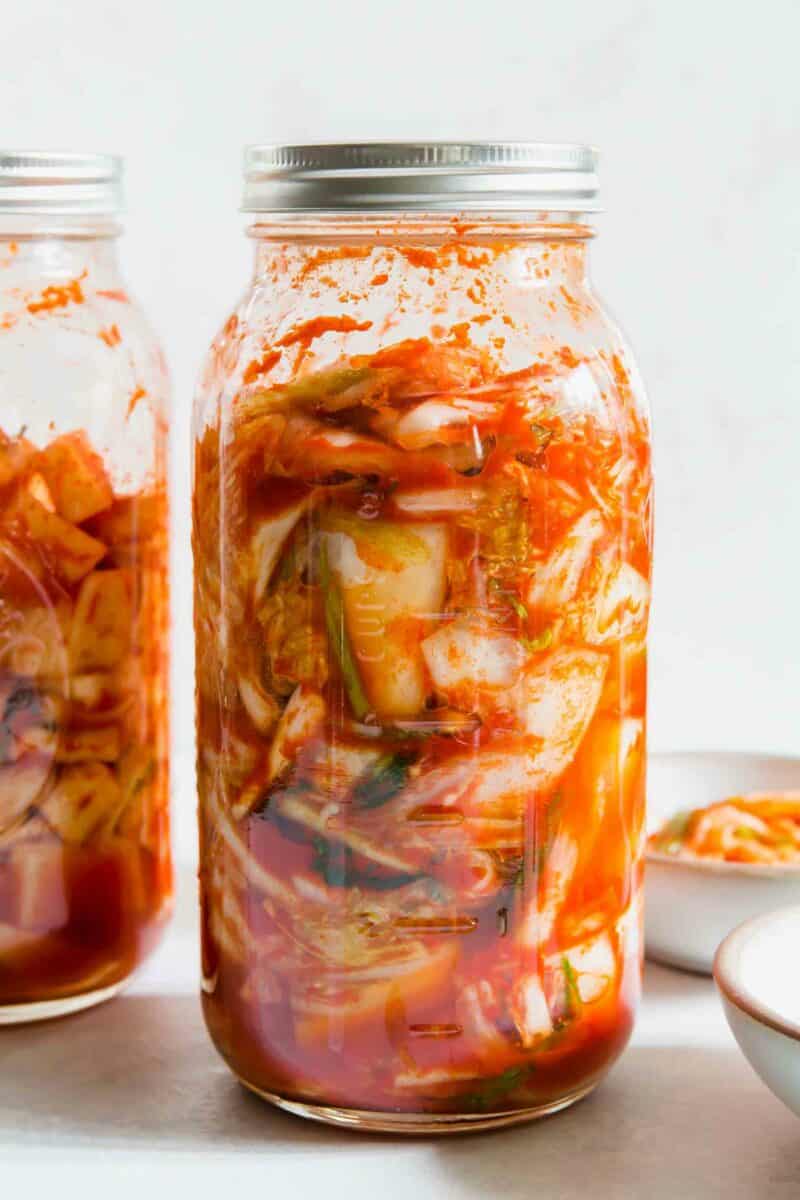
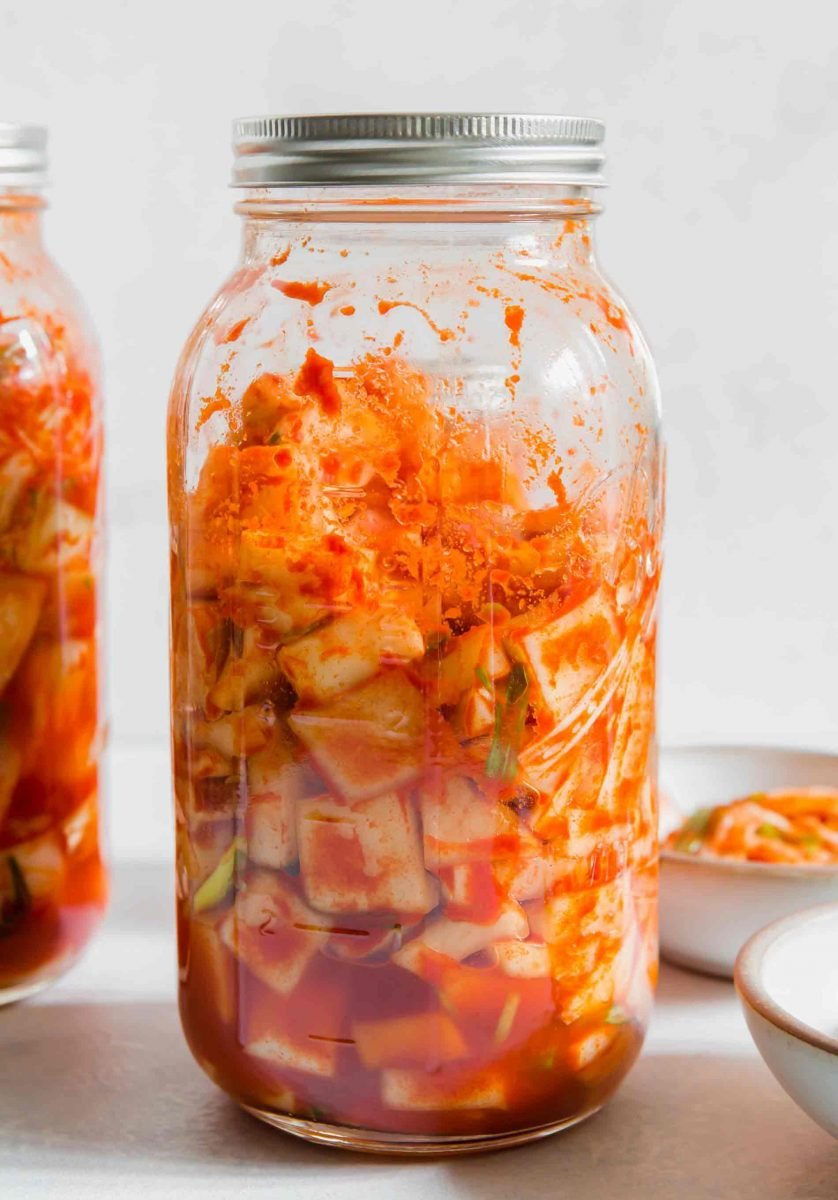
I bought wide mouth half gallon jars. The wide mouth jars make stuffing the kimchi into the jars a lot easier.
Watch us make homemade kimchee and then make it yourself!
Thank you so much Chun Ok for showing me and everyone how to make homemade kimchee! This will be a forever treasured gift.
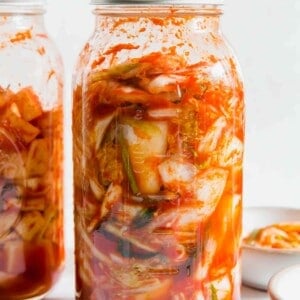
Homemade Kimchi (Kimchee)
Ingredients
For the cabbage:
- 5 pounds (2268 g) napa cabbage, cut into 1-inch, bite-sized pieces
- ½ cup (146 g) sea salt
- 1 cup (236 ml) water
Seasonings for kimchi:
- ½ medium sweet onion
- 1 bulb garlic, peeled
- ¼ cup (59 ml) water
- 1 bundle green onions, julienned
- ½ cup (118 g) red pepper powder
Instructions
- Place cabbage in a very large bowl. Mix together sea salt and water and stir until sea salt has dissolved. Pour over cabbage and mix together with your hands. Let sit for 1.5-2 hours.5 pounds (2268 g) napa cabbage, 1/2 cup (146 g) sea salt, 1 cup (236 ml) water
- In the meantime, blend together onion and garlic with 1/4 cup water to create a puree. Pour into a medium bowl then mix together with red pepper powder and green onions. If you are making a separate radish kimchi, save a bit of this mixture for the radish kimchi.1/2 medium sweet onion, 1 bulb garlic, 1/4 cup (59 ml) water, 1 bundle green onions
- Once the cabbage has significantly wilted, rinse cabbage to get most of the salt water off. Place back into the very large bowl then toss the cabbage with the red pepper seasoning mixture until well-coated.1/2 cup (118 g) red pepper powder
- Place seasoned kimchi into a large mason jar and using your fist, punch down the cabbage to compress it all in the jar. Keep stuffing the jar until it’s completely full and use another jar, if needed.
- Tightly close the lid on the mason jar(s) and leave out at room temperature overnight. Taste the kimchi the next day and if you prefer to have it more sour, leave out for another day or more. If you think it tastes fine after it has sat out overnight the first night, place in the fridge.
- Kimchi can last for a very long time in the fridge because it’s a fermented dish. I would say probably no more than one year though, but that’s just me haha ;)









I’m about to try my first batch, homemade, didn’t know it was this easy, read before that it takes a long to age, we’ll see…
I tried making the cabbage kimchi and it tasted so good. So simple to make yet tastes even better than those sold in groceries.
First time I did this receipt great
Just made my first batch, literally, and even pre-fermentation it is amazing. I can’t wait for the complexities to come into play! Thank you so much for demystifying this Korean dish I have enjoyed for so long.
Very easy to do. This was my first time making it thank you
My sister and I had fun making this and everyone loved it! Need to make another batch asap! Thank you for the video and recipe. It was super easy.
I notice that you don’t use ginger or fish sauce. Just a preferred taste for you?
no, it’s just what Chunok traditionally makes
If I rinse my kimchi before eating, will I still get the benefits of eating fermented food. Mine is too hot to eat.
you should, yes
Thank you for creating a video for making this recipe!! Delicious simple recipe, thank you for listing this on your blog. I love how easy this recipe is, and you don’t need odd items like dashima or fish sauce to make it taste good. The flavor is delectable. I buy daikon radish since Korean radish is not available to me. I also added 2-3 carrots, and spiralized both carrots and radish. I also slice up a bosc pear to add (in lieu of Asian pear since those are hard to find in my area).
Once I blend up the seasonings for kimchi, I mix everything together and it all fits into a one gallon jar. I have a jar that’s meant for fermenting/pickling, and it came with ceramic weights. So I pack the kimchi in the jar as tightly as possible and put the weights on top. Usually there is enough salty liquid left on the cabbage leaves that that it moves to the top as a layer of brine that protects the kimchi from outside molds and bacteria. I personally allow the kimchi to ferment for about a full week.
Not sure if this will help anyone (not that anyone was asking), but I found that this works well for me.
Thank you once more for this easy, EASY recipe!!!
I LOVED the video. You’re both so fun and natural. That Kimchee looks amazing. I’ll be making it soon. I’m so glad I stumbled onto the video and recipe.