
This post may contain affiliate links. Please read our disclosure policy.
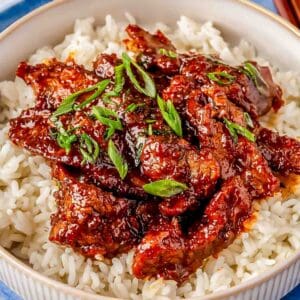
This better-than-takeout Mongolian beef recipe is thinly sliced beef crisped to perfection and finished in a velvety, sweet, and savory sauce. This Chinese take-out classic takes 30 minutes to make at home!
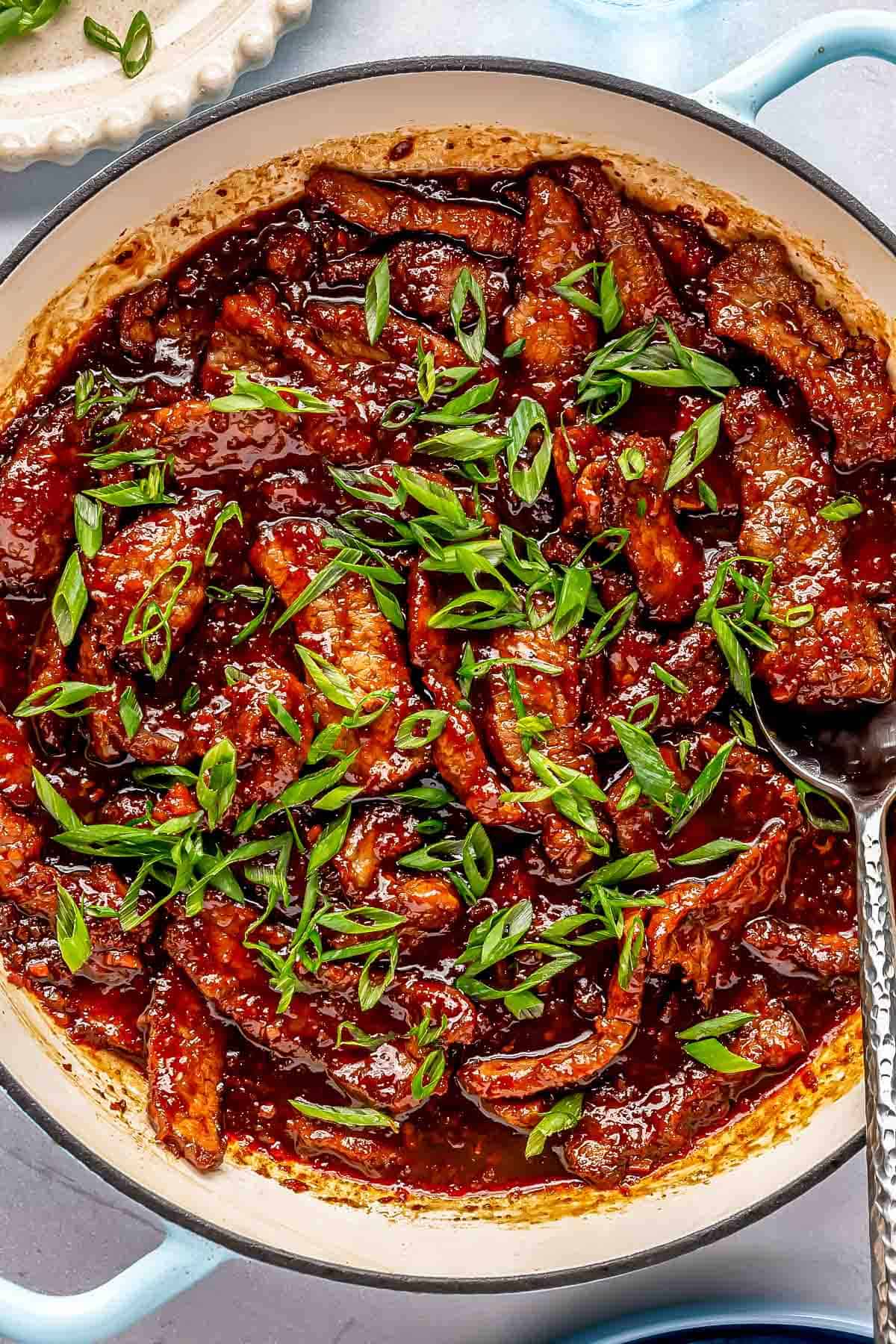
Imagine the sizzle of a pan, the smell of a sweet and savory sauce, the crunch of crispy, yet tender beef… yum. There’s nothing like making your favorite restaurant meal at home. This Mongolian beef is a mouthwatering DIY version of a classic Chinese take-out dish. It’s SO simple to make, too.
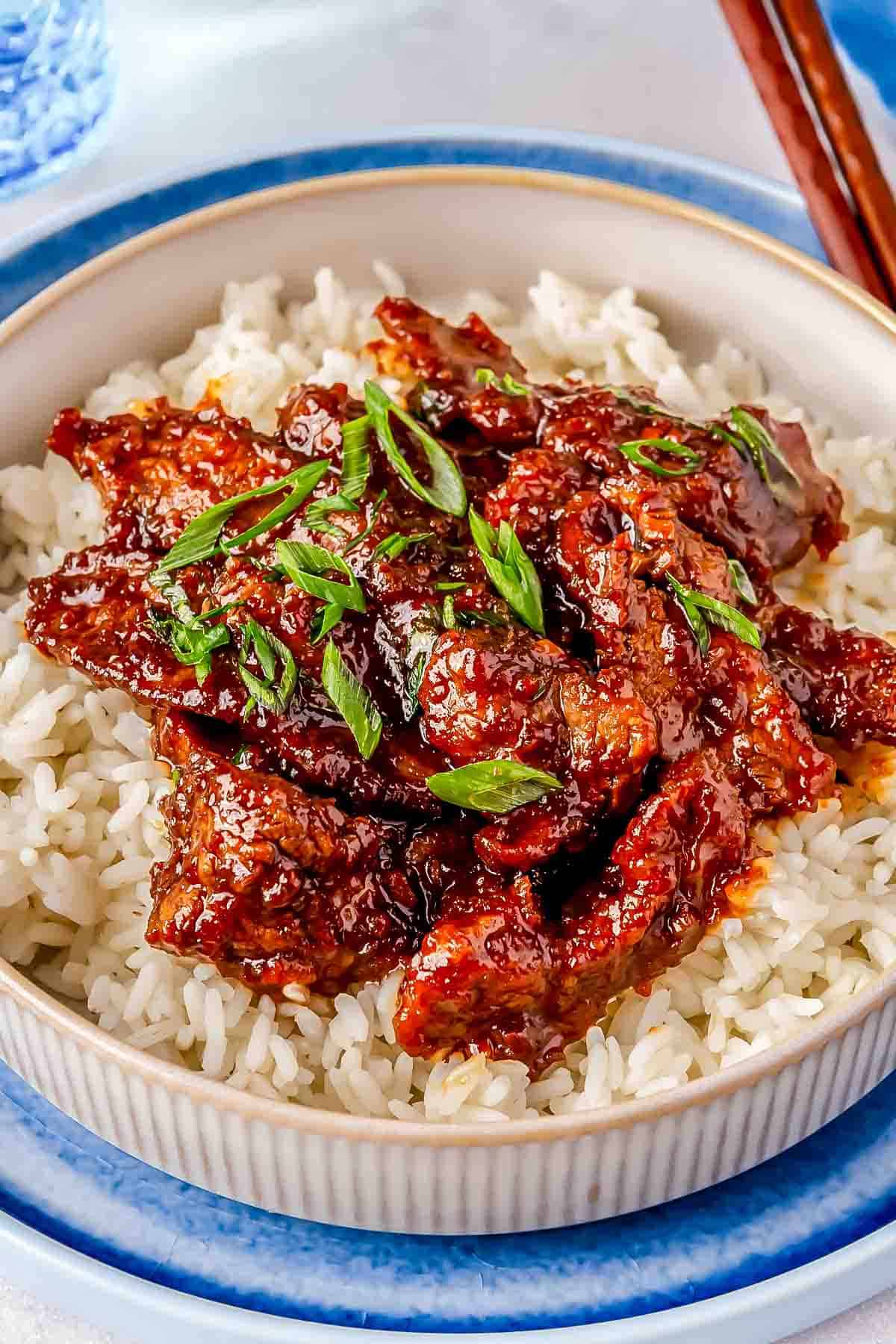
Thin slices of tender beef are crisped to perfection and coated in a velvety sauce filled with the flavors of zesty ginger, garlic, and brown sugar. Add a pop of color from sliced scallions and call it a day. So before you pick up the phone to dial takeout, think again!
Why You’ll Love This Take-Out Mongolian Beef Recipe
This better-than-take-out Mongolian beef is a favorite for many reasons. Allow me to name a couple.
- Quick and easy. This homemade Mongolian beef is easy to make in 30 minutes.
- Customizable. Making this Mongolian beef at home will give you peace of mind knowing that you’re using less grease and quality ingredients. Customize the flavors and add-ins however you’d like!
- Crispy and flavorful. The flavor-texture combo of this dish is to die for. The sweet and savory sauce matched with beef that is perfectly crispy on the outside and delightfully tender on the inside will have you coming back for seconds.
What Is Mongolian Beef?
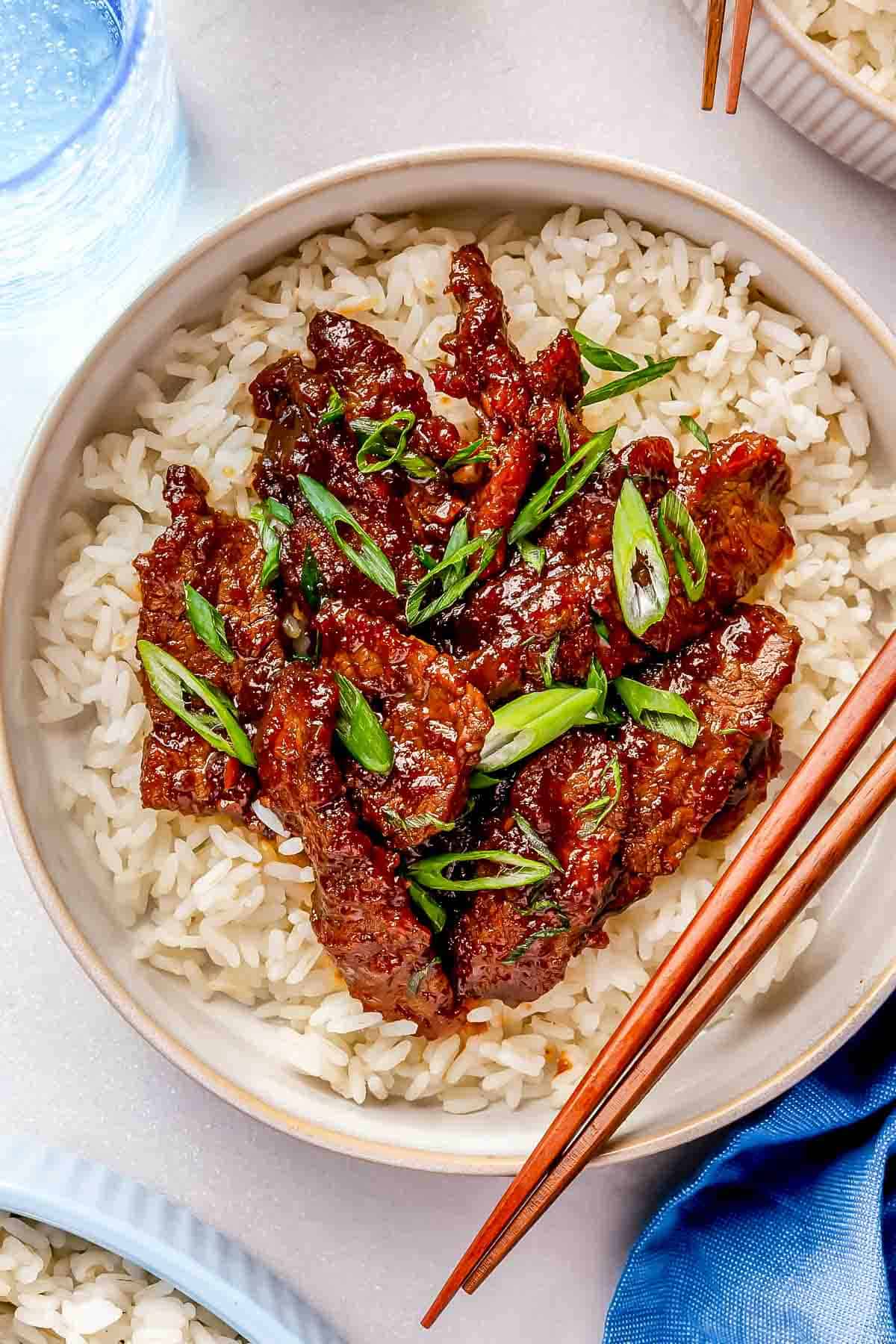
Mongolian beef is a popular dish served in Chinese restaurants. Contrary to the name, this dish comes from Taiwan, not Mongolia. The typical Mongolian beef found in American-Chinese restaurants consists of thinly sliced beef stir-fried in a wok with green onions and finished in a luscious, sweet, and savory sauce.
Using Other Cuts of Beef
Flank steak is my top pick, but you can achieve a similar result with skirt steak or thinly sliced chuck roast (like you’ll find in my Vietnamese boc luc lac). Whichever beef you choose, look for a cut that has some fat in it. Fat adds to the flavor of the dish and leads to a more tender, melt-in-your-mouth entree. Interested in learning about the various cuts of beef? Check out this informative article.
Tips for Success
Want to know how to take your Mongolian beef to the next level? Here are some tips and tricks that will help you achieve a successful outcome.
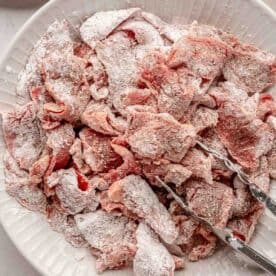
- Don’t skip the cornstarch. Cornstarch is crucial in this recipe for 2 reasons. (1) It contributes to the crispiness of the beef once seared and (2) it is responsible for the thickening of the sauce at the end of the recipe. So don’t forget to coat the beef in cornstarch.
- Don’t coat the beef too long in advance. Aim to toss your beef slices in cornstarch about 10 minutes ahead of cooking. Allowing the beef to sit in the cornstarch for too long will cause it to get mushy, and no one wants that.
- Use enough heat. Attempting to sear the beef in a pan that isn’t quite hot enough will leave you disappointed. It will not caramelize properly and will spend too long in the pan, causing it to toughen and release liquid. Also, the cornstarch will not activate as a thickening agent unless it has enough heat to work with.
- Sear in batches. If you crowd the pan, it will cool down quickly, making it harder to get the sear you are looking for. The beef will release its moisture, leaving you with a less-than-crispy, tough bite.
What Does Coating Beef in Cornstarch Do?
In Chinese cooking, coating meat in cornstarch is called velveting, and it’s the secret to moist, tender, and crispy beef in classic Mongolian beef recipes. Meat that’s left uncoated will release its liquid as it cooks. Cornstarch locks in the juices while crisping the outside, making the meat more tender.
What to Serve with Mongolian Beef
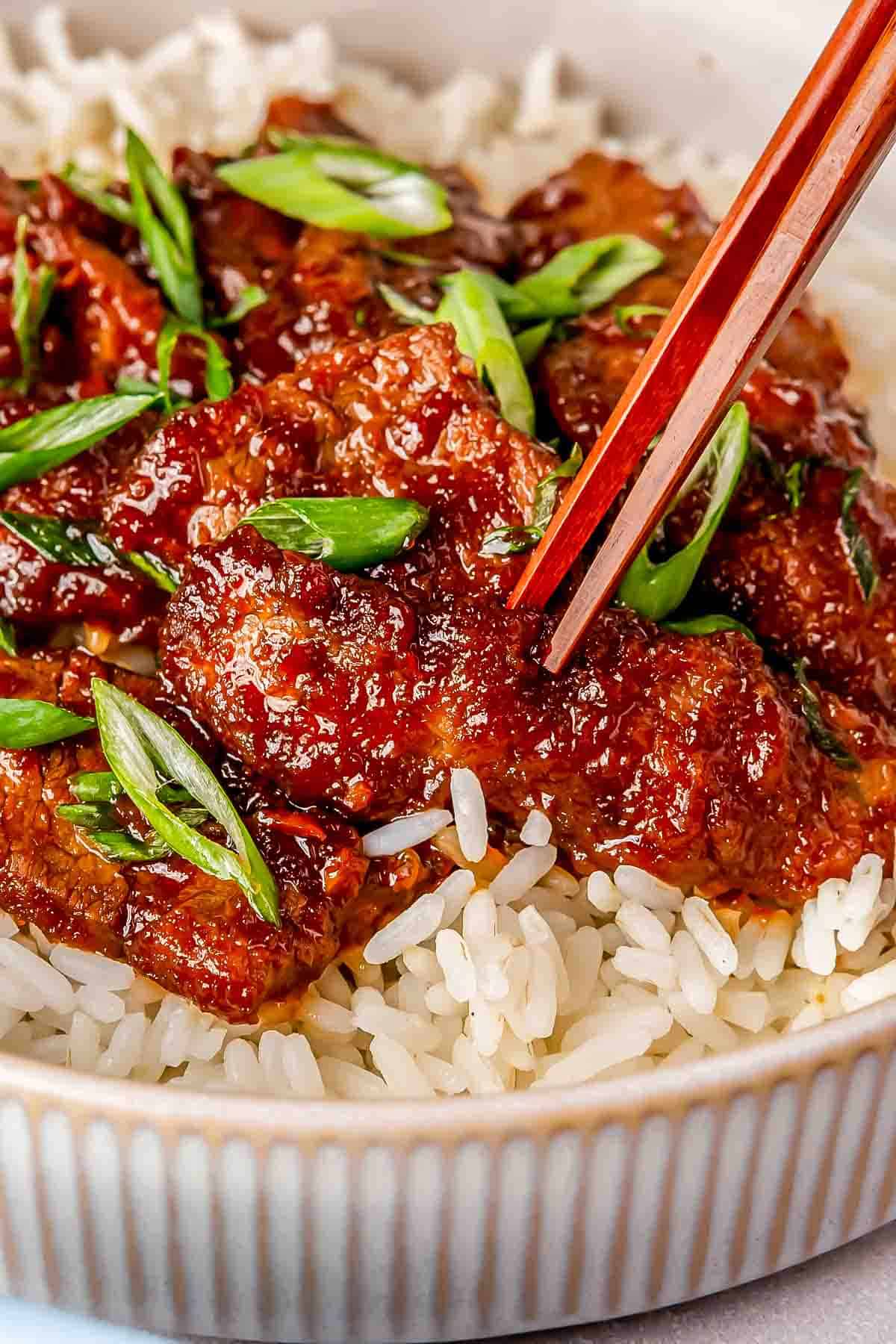
Mongolian beef is often served over steamed white rice, but feel free to try it with take-out-style fried rice, or more easy side dishes. Here are some of my favorites.
- Salad. Pair your beef dish with this Ridiculously Amazing Asian Ramen Salad or a Spicy Chinese Cucumber Salad.
- Steamed buns. Homemade Mantou 饅頭 (Chinese Steamed Buns) are a classic Chinese side dish and they’re super easy to make.
- Veggies. Try this easy Chinese Cabbage Stir Fry or a side of Garlic Roasted Green Beans.
How to Store and Reheat Leftovers
Chinese (better than take-out) leftovers? Yes, please. Make a double batch of this Mongolian beef and enjoy it in the coming days. Here’s how to go about storing and reheating.
- Storing. Allow the dish to cool completely before sealing it in an airtight container and storing it in the refrigerator for up to 3 days or in the freezer for up to 2 months.
- Reheating. Heat a bit of oil in a pan and saute until sufficiently warm. You can also use the microwave. If you are reheating from frozen, allow the dish to thaw in the refrigerator for several hours (or overnight) first.
Mongolian Beef
Equipment
Ingredients
- Vegetable oil, divided
- 1 teaspoon fresh ginger, minced
- 4 garlic cloves, minced
- 1 ½ cup (237 ml) low sodium soy sauce
- 2 tablespoons dark soy sauce
- ¾ cup (237 ml) water
- ⅓ cup (73 g) dark brown sugar
- 2 pounds (907 g) flank steak, sliced
- ½ cup (64 g) cornstarch
- Green onions, sliced
Instructions
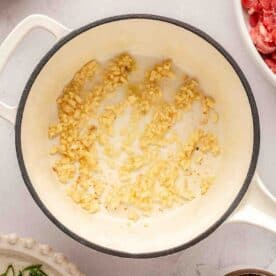
- In a small saucepot, over medium heat, add 2 teaspoons of vegetable oil and sauté ginger and garlic until fragrant, about 2 minutes.Vegetable oil, 1 teaspoon fresh ginger, 4 garlic cloves
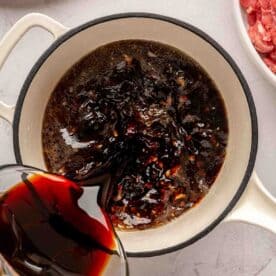
- Add the soy sauce, water, and brown sugar and stir to combine. Bring mixture to a boil and let boil for 3 minutes, then remove from heat and set aside.1 ½ cup (237 ml) low sodium soy sauce, 2 tablespoons dark soy sauce, ¾ cup (237 ml) water, 1/3 cup (73 g) dark brown sugar
- In a large bowl, toss sliced flank steak with cornstarch, shaking off the excess. Place in fridge for 10 minutes to allow coating to stick better on the beef.2 pounds (907 g) flank steak, 1/2 cup (64 g) cornstarch
- After 10 minutes, in a heavy bottom saucepan, over medium high heat, add 1/2 cup of vegetable oil and add the beef to the pan, in batches, to sear the outside on all sides, but barely cooked in the middle.
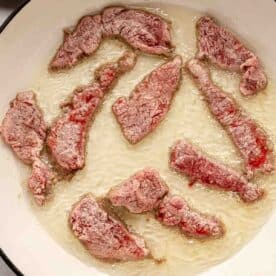
- Remove and let drain on paper towels as you finish up the rest of the beef. Pour out any excess oil in the saucepan.
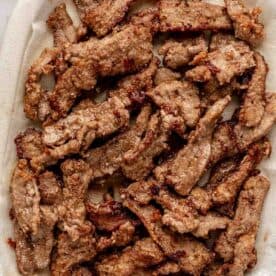
- Place the saucepan back on the burner, but on medium heat, and pour in the sauce from earlier. It should come to a boil immediately. Add in the steak and coat with the sauce. Continue cooking beef and sauce at a boil for 2 minutes, stirring constantly. The sauce will thicken gradually.If you find it's not thickening to your desired sauce thickness, take 1 tablespoon of cornstarch and dissolve it in 2 tablespoons of water and add it to the skillet. Add in the scallions.Green onions
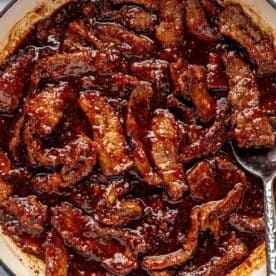
- Serve hot over white or brown rice.
Nutrition
Photographs by Jess Gaertner Creative








It looks good. We’re making this tonight! But be careful, especially if you’re trying to watch what you eat. This recipe, split into four servings, is over 700 calories per serving. Into six servings, it’s still over 500. Pair it with steamed veggies instead of rice to keep calories down. :)
What if you don’t have a rice cooker? :( Also what is the best kind of rice to use for steamed rice? I just bought jasmine rice but not sure if it will do the trick.
You can cook the rice on the stove. Same water/rice ratio. The best kind of rice is Japanese sushi rice.
Very good I did it but I need Moore souse
I plan to use brown sugar substitute to drop calories further.
I made this last night and it was really great. The only change I made was to add a pinch of red pepper flakes at the end of cooking the garlic and ginger. It was quick, easy, and really tasted like Mongolian Beef. Will def make again!
I made this meal two nights ago and it was…amazeballs. Plain and simple. It tasted like the real deal. Even my 2 year old daughter enjoyed it! Now I’m going to to need you to master a General Tso’s recipe. :)
I’m hungry all of a sudden…and the bad part? I just ate, haha. Love your photos, they really capture the freshness :)
this recipe as is at 5 servings, is 559 calories per serving (not too bad for dinner, but you better skip the rice)the sodium is 1976 per serving & 68 carbs (no rice). Doesn’t sound much different from take out…
5 Servings
Amount Per Serving
Calories 559.1
Total Fat 13.5 g
Saturated Fat 5.8 g
Polyunsaturated Fat 0.5 g
Monounsaturated Fat 5.4 g
Cholesterol 90.7 mg
Sodium 1,976.3 mg
Total Carbohydrate 67.7 g
Dietary Fiber 0.5 g
Sugars 51.6 g
Protein 40.4 g
Hi Mindy, thanks for this! Just to clarify, I never said this was a healthy alternative to take-out, I merely said it’s a tad bit better than the regular greasy take-out that you get because of less grease used to make this. Not to mention, it’s cheaper than spending money on take-out and of course, everything in moderation :) if you aren’t a fan of the sodium levels in this dish, by all means, you may cut down on the soy sauce used or use a different, leaner cut of steak or even try this with white meat chicken.
I love your blog! I just discovered it via pinterest and couldnt be more excited! Keep up the good work. Your take out fake outs were very delicious!
This looks so good! I totally get what you mean about back cleavage! I ended up lacing up my wedding dress so tight that at times I have too much front and back cleavage! But I was worried about it slipping too far down! Congrats on your wedding! It’s a fun time!
xo